When Speaking Up Can Make a Difference: Understanding “Direct” Bystander Intervention
You see an argument getting heated.
A voice gets louder. Someone steps closer. People start looking over.
You know something isn’t right, but you also don’t want to make the situation worse.
What do you do?
Bystander intervention doesn’t always mean stepping between people or trying to stop a situation yourself. Sometimes, when it is safe to do so, one of the most effective things you can do is simply speak up.
That’s the first of the 5 D’s of bystander intervention: Direct.
What Does “Direct” Mean?
Direct intervention means addressing a situation yourself by speaking up or taking action when you have determined that it is reasonably safe to do so.
It can be as simple as saying:
“Hey, let’s take a breath.”
Or:
“Let’s give each other some space.”
The goal isn’t to win an argument, prove someone wrong, or take control of the situation.
The goal is to interrupt a potentially harmful situation and help prevent it from escalating.
Safety Comes First
Before deciding to intervene directly, take a moment to assess what’s happening.
Ask yourself:
- Is anyone carrying a weapon?
- Has anyone become physically aggressive?
- Is someone making threats?
- Is the situation getting more dangerous?
- Do I have a clear way to leave?
- Is there someone nearby who is better equipped to help?
If the answer to any of these questions raises serious concerns, Direct may not be the right choice.
You can create distance, get help, or use another form of bystander intervention.
Walking away or getting someone else involved isn’t ignoring the situation.
It’s making a safe decision.
What Direct Intervention Can Sound Like
When it is safe to speak up, keep your words simple and your tone calm.
Instead of:
“Back off!”
Try:
“Let’s take a step back.”
Instead of:
“What’s wrong with you?”
Try:
“Let’s slow this down.”
Instead of taking sides, you can acknowledge what’s happening without agreeing with either person:
“I can see that you’re upset. Let’s give everyone some space.”
Your tone matters just as much as your words.
A calm voice can help lower the energy of a situation. A confrontational tone can sometimes push it in the opposite direction.
A Real-Life Scenario
Imagine you’re at a neighborhood corner store.
Two people begin arguing near the entrance. One person says something disrespectful, and the other person becomes visibly upset. Their voices get louder, and people nearby start watching.
You don’t see a weapon.
No one has become physical.
You have a clear way to leave.
You’ve assessed the situation and believe it is safe to speak up.
You might say:
“Hey, let’s take a step back. We don’t need this to go any further.”
Then you give them space.
You don’t argue with either person.
You don’t touch anyone.
You don’t physically place yourself between them.
You simply use your voice to interrupt the escalation.
That’s Direct intervention.
Another Example: When a Game Gets Heated
You’re at a neighborhood basketball court.
Two players begin arguing over a play. Their voices get louder. One player steps closer to the other, and several people begin gathering around them.
If you’ve assessed that it is safe, you might say from a reasonable distance:
“Y’all, let’s chill. Take a step back and cool off.”
The goal isn’t to referee the game.
It’s to help create an opportunity for everyone to take a breath before the situation becomes something more serious.
Direct Doesn’t Mean Confrontational
One of the biggest misconceptions about bystander intervention is that you have to be aggressive to make a difference.
You don’t.
Direct intervention can be calm, respectful and brief.
You don’t have to lecture someone.
You don’t have to threaten anyone.
You don’t have to prove that you’re right.
Sometimes, a few calm words are enough to interrupt the momentum of a situation.
And sometimes, they aren’t.
That’s okay too.
Know When Not to Intervene Directly
There will be situations where speaking up isn’t safe.
If someone has a weapon, physical violence is already happening, or you believe intervening could put you or someone else in greater danger, don’t put yourself in harm’s way.
Create distance.
Get help.
Call the appropriate emergency or professional response service when necessary.
Bystander intervention is not about being a hero.
Your safety matters too.
Direct Is One Option — Not the Only Option
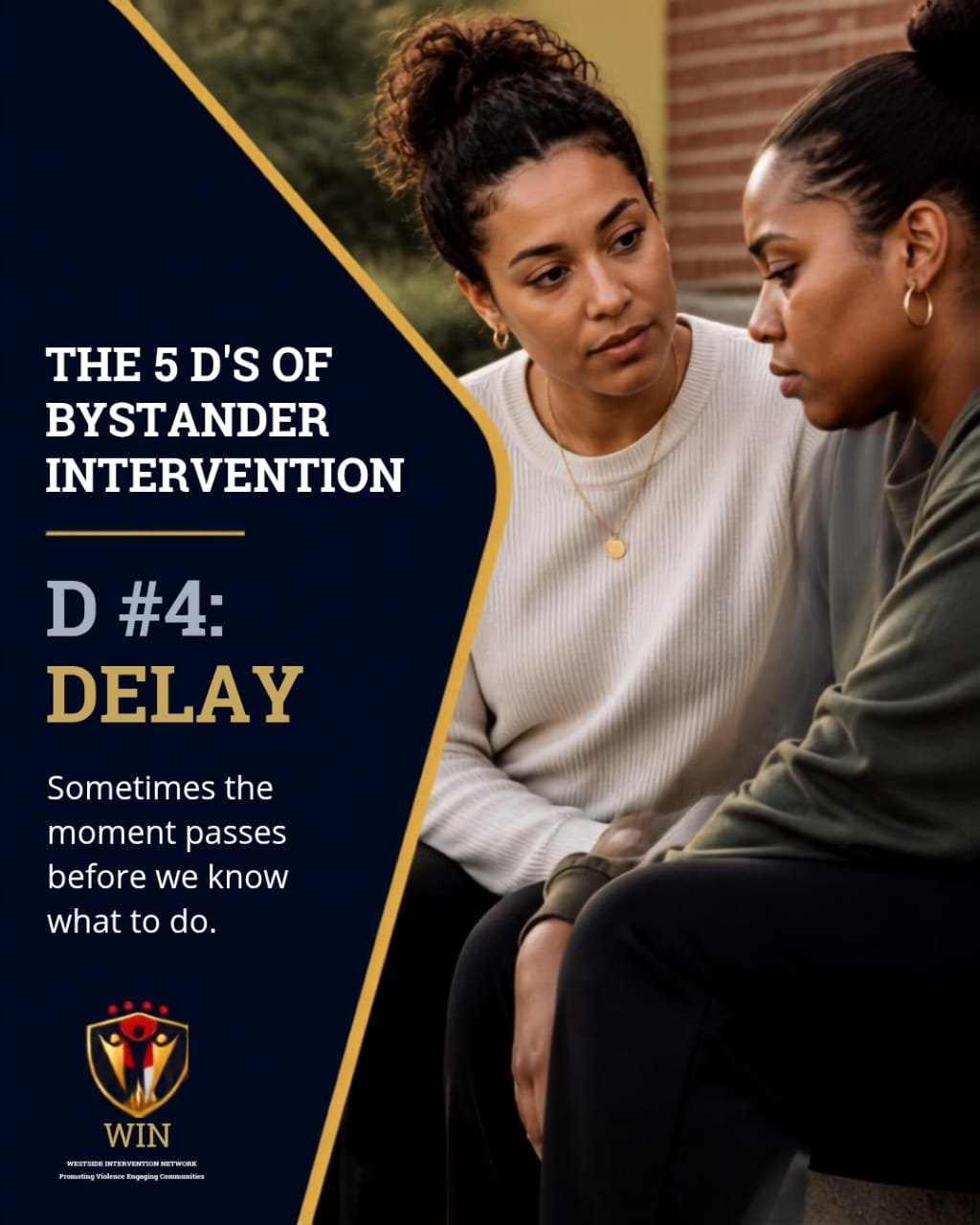
The 5 D’s give us different ways to respond to situations that may be harmful or unsafe:
Direct. Distract. Delegate. Delay. Document.
This week, we’re focusing on Direct — but knowing when not to use Direct is just as important.
The goal isn’t for everyone to confront every situation.
The goal is for more people to recognize that they have options.
Building Safer Communities Together
Violence prevention doesn’t happen only after something goes wrong.
It happens when community members develop the knowledge, confidence and skills to recognize warning signs, support one another and respond safely.
Sometimes that response is speaking up.
Sometimes it’s getting help.
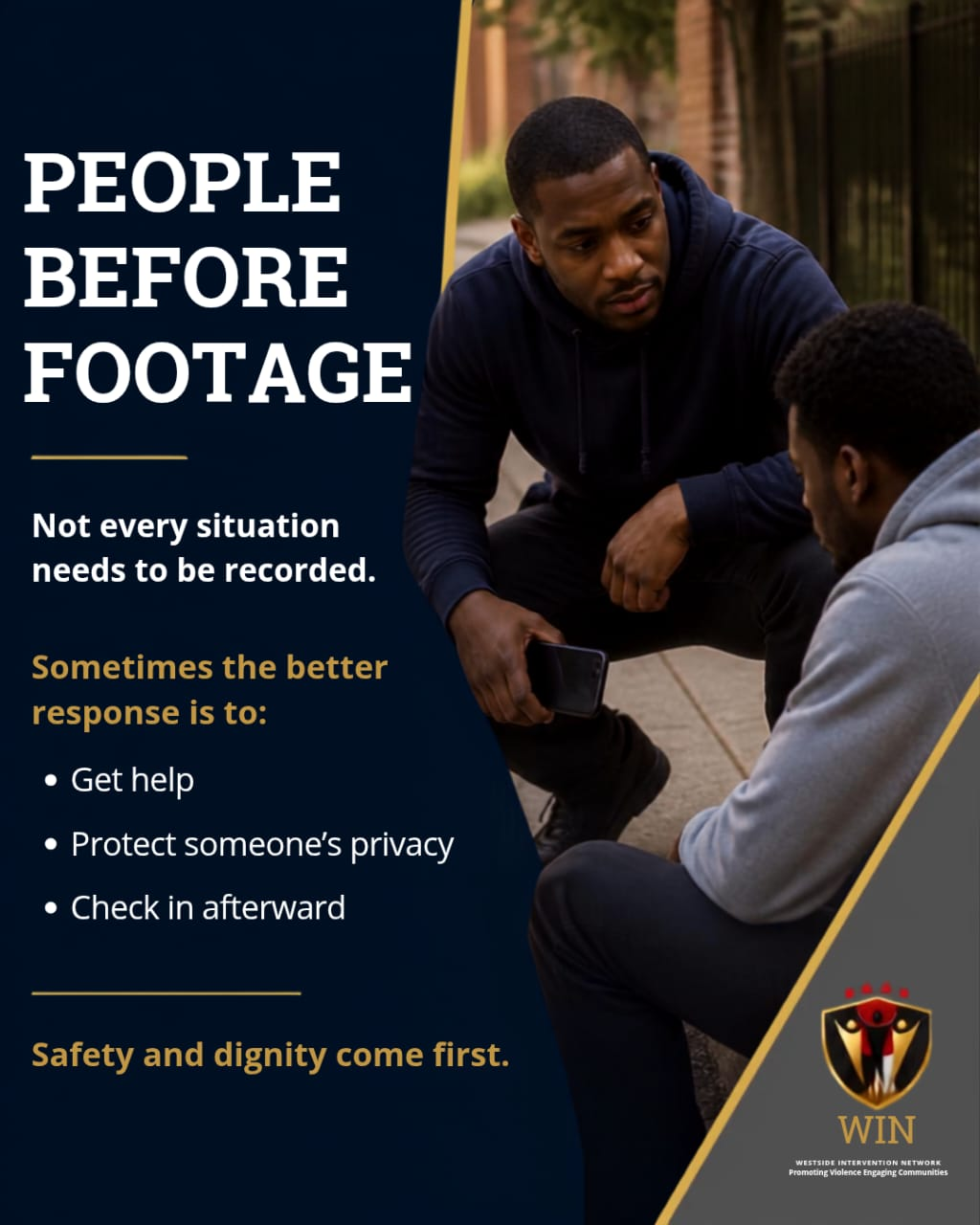
Sometimes it’s checking on someone afterward.
And sometimes the safest thing you can do is create distance.
There is no single right way to intervene in every situation.
What matters is knowing your options and making the safest choice available.
Would you know what to say?
The next time you see a situation beginning to escalate, take a moment to assess what’s happening.
If it’s safe, your voice may be able to help change the direction of the situation.
Speak up when it’s safe. Step back when it’s necessary. And always put safety first.